Most homeowners choose windows and doors based entirely on design trends—frame color, grid patterns, or hardware finishes.
At Constructive, we look at the structural reality. A window or door is fundamentally a massive, intentional breach in a perfectly sound, weather-tight wall. You can invest in the most expensive, triple-pane, energy-efficient units available, but if the rough opening isn't properly engineered and flashed, that unit will leak air, trap moisture, and bind within a few seasons. High-performance openings don't fail because of the product; they fail because of installation speed. True performance relies entirely on the structural integration behind the drywall.
The Sill Pan: A Built-In Exit Route for Water
Window and door components face extreme temperature swings, UV degradation, and wind-driven rain. Over a twenty-year span, sealant joints can crack, and water can eventually find its way past the outer trim. Because moisture penetration is an eventual reality, the framing underneath must have a built-in strategy to shed it.
We do not install windows directly onto flat wood framing. Instead, we construct a dedicated sloped sill pan directly into the rough opening before the window goes in, pitching it downward toward the exterior of the house. The back and sides of the pan feature a raised lip, or back dam. If water gets past the window frame, it hits the back dam, runs down the slope, and is safely routed out onto the weather-resistant barrier rather than soaking into the subfloor or wall framing.
Deflection, Shims, and the Multi-Point Lock
Large windows and heavy exterior doors carry significant weight and are subject to structural settling. If a unit is not perfectly square, level, and plumb, the operational hardware will wear out prematurely, and weather seals will fail to compress completely.
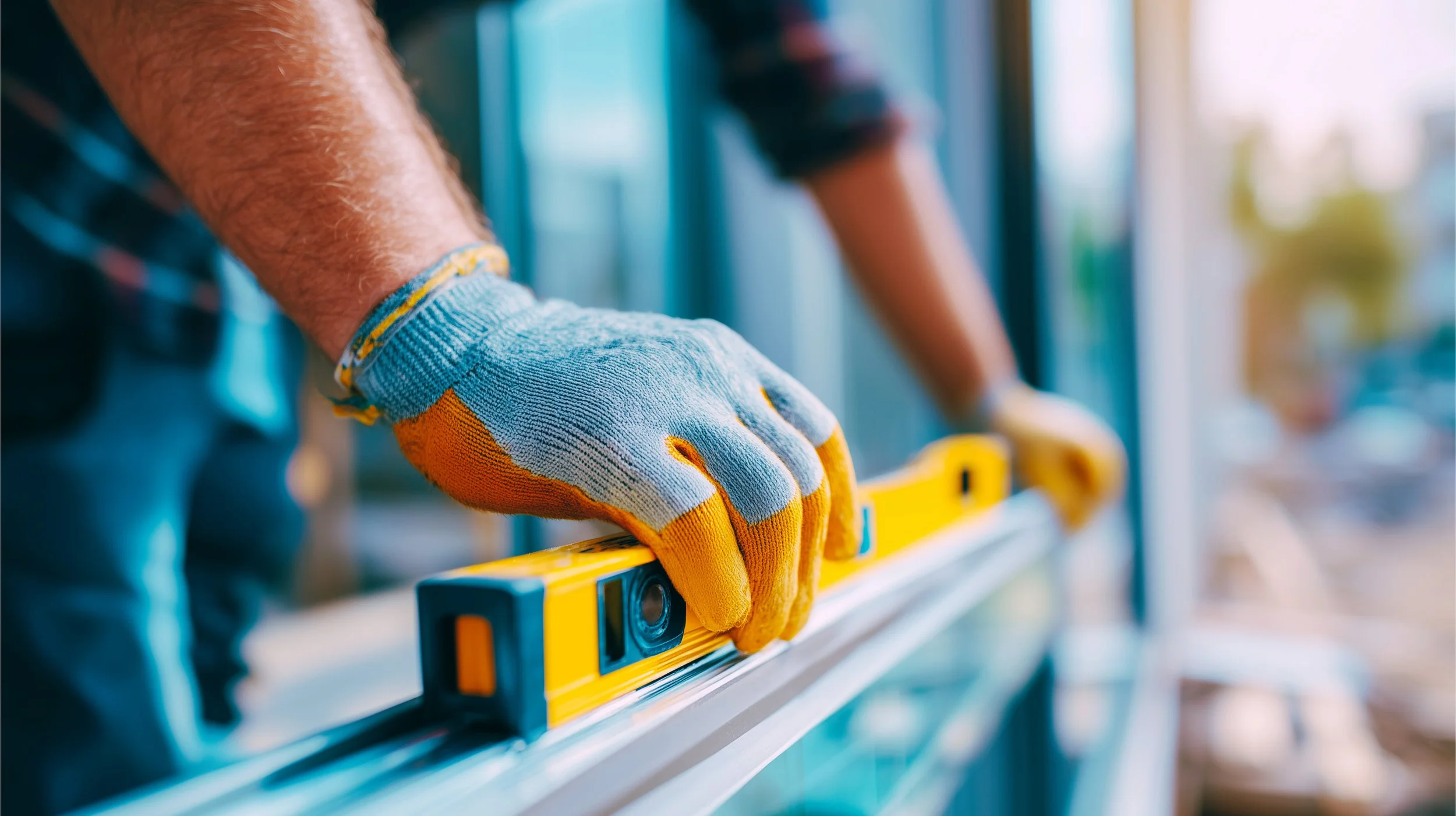
Proper shimming requires patience and mechanical precision. We space heavy-duty shims strategically behind the hinges and latch points to transfer loads directly into the structural framing studs. If a contractor over-tightens fasteners or forces shims into place, it creates frame deflection—bowing the window jamb or door frame out of alignment. Even a fraction of an inch of deflection prevents modern multi-point locking systems from engaging smoothly and causes seals to pull away, leaving gaps for drafts and insects.
Why We Left Fiberglass Behind
The rough opening gap—the small space between the window unit and the structural wall studs—must be completely sealed against air and thermal transfer. Historically, builders stuffed pink fiberglass insulation into these gaps with a putty knife. We avoid this approach entirely. Fiberglass does not stop air movement; it acts as a filter that traps airborne dust and absorbs hidden condensation, leading to localized mold growth.
We seal the entire perimeter using specialized, low-expansion window and door foam. This closed-cell polyurethane material expands just enough to fill every microscopic void, creating a dense, continuous thermal barrier. Because it is low-expansion, it exerts zero pressure on the window frame, preventing jamb distortion while remaining flexible enough to expand and contract with seasonal temperature changes.
Relying on generic, high-speed installation crews usually means risking hidden water damage and compromised energy efficiency. We approach every rough opening as a critical engineered transition, ensuring that the structural flashing, alignment, and thermal seals protect the interior of the home for decades. If your property requires structural window or door replacement, let’s get to work.