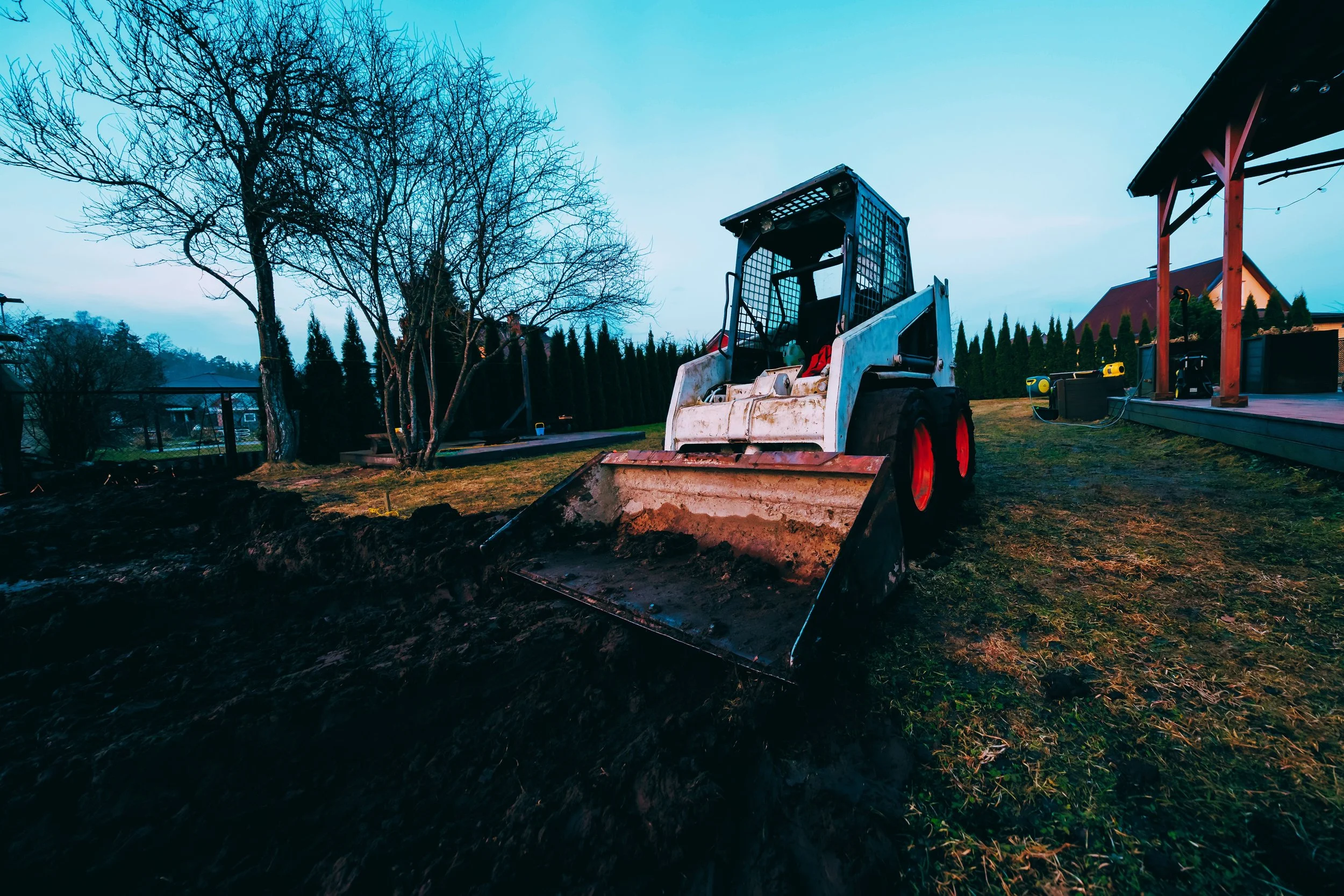
Most homeowners think excavation is just about hiring someone to dig holes with big iron or move piles of dirt around a property.
At Constructive, we look at it as a calculated manipulation of elevations, soil mechanics, and hydrology. Groundwork dictates the lifespan of every foundation, driveway, and structural slab.
If a builder does not understand the exact load-bearing capacity of the native soil or where subsurface water travels during a heavy storm, the entire project is structurally compromised before a single yard of concrete is ever poured.
The Trap of Over-Digging Native Soil
Every soil type behaves differently under a load. When a patch of land has sat untouched for decades, the earth is naturally consolidated and highly stable. The moment a bucket breaks that ground, the soil structure changes completely.
We plan digging depths with extreme mathematical precision to leverage this natural stability. We excavate down to the exact engineered depth where the concrete footings will sit, leaving the native base completely undisturbed.
If an operator digs too deep and tries to fix the mistake by dumping loose dirt back into the hole, that uncompacted fill dirt will settle unpredictably over time under the weight of the building.
This leads to cracked foundations and structural sagging. We dig it right the first time so the structure rests on a solid, unyielding geological foundation.
The Discipline of Compaction Lifts
Excavation doesn't end once a foundation wall is poured; the space around the outside of the concrete—the over-dig zone—must be backfilled. If this zone is filled improperly, the loose soil will retain massive amounts of water, increasing hydrostatic pressure against the basement walls and creating a funnel that pulls water directly toward the home.
We handle backfilling through a disciplined, mechanical process known as lifting. Instead of dumping six feet of loose earth back into the trench all at once, we backfill in strict 6-to-8-inch layers. After each individual lift is placed, we run commercial vibratory compactors over the soil to achieve optimal density.
This process forces air out of the soil particles, matching the compaction level of the surrounding native earth and ensuring the ground won't sink, pull away, or hold bulk water against the foundation down the road.
Shaping the Land: Earthen Swales and Surface Hydrology
True water management happens long before moisture ever touches a foundation wall or a crawlspace barrier. It starts at the property line by controlling surface runoff. If a site is graded improperly, heavy rainfall will pool in flat areas or wash away valuable topsoil.
We design custom earthen swales and heavy stone retention paths to permanently manage property hydrology. A swale is a wide, shallow, engineered ditch designed to catch high-volume runoff from hillsides or driveways and gently slow it down.
By calculating the exact pitch and slope of the land, we shape these swales to channel water safely around the home and redirect it toward natural drainage basins or municipal storm systems. This keeps the immediate building site dry and protects the surrounding landscape from erosion.
Cutting corners on site prep is the fastest way to ruin a high-end build. Because we own and operate our own fleet of heavy equipment, we control the grading precision from the very first scoop of dirt.
Building it right means ensuring the hidden groundwork protects the property for the next thirty years. If a property requires technical site excavation or proactive drainage engineering, let’s get to work.